The first hour, in order
The morning after a shop door is forced has an order that saves money later. Photographs first, of the door, the frame, the lock and the floor, before anything is touched. The police report and its number. The glazier for the glass. Then the locksmith, whose job is to make the opening lock again and to work out with you which other locks the event has touched. Post break-in lock repair runs $155 to $415 and covers the parts that took the force: a bent bolt, a torn keeper, a stile spread at the lock, a strike pulled out of a wood jamb.
The figure is written down on the call from your description, so describe the door plainly: aluminum with a glass panel or wood in a brick front, one leaf or a pair, and what exactly is bent. A photo by text is better than a description. The $89 service call is inside the figure and the itemized receipt matches the work order line for line, which is the document the insurer will want first.
Two streets, two kinds of building
25th Ave, the Japanese-American block west of El Camino Real, is mostly two-story buildings from the 1920s through the 1950s: a shop or restaurant at street level, apartments or offices above, and a shared rear door onto the parking lot that three tenants and the upstairs residents all use. The street doors are wood in older frames or aluminum retrofits. B St downtown is restaurants and bars behind pairs of glass doors, some with no center post, and older wood doors in brick fronts, with a rear door onto an alley or the garage.
The building type decides how far the event reaches. A forced door on a stand-alone shop touches that shop. A forced rear door on a 25th Ave building touches every tenant who has a key to it, and the landlord who owns the door. Say on the call which kind of building it is, and whether the door that was forced is yours alone or shared; that changes who authorizes the repair and who needs the written line afterwards.
The keys that left with the drawer
The lock that was broken is the obvious one and not always the important one. If the cash drawer, the office desk or a hook by the back door held keys, and those keys are gone, every door they open is now on a key someone else has. That usually means the front, the rear, the office and the safe, and on a 25th Ave building it can mean the shared rear door and the door to the upstairs corridor as well. Rekeying is $24 to $40 per cylinder, and the count is made in the shop with you, door by door.
If no key is missing, the untouched cylinders can stay, and the technician says so rather than replacing them. The event is still a good moment to notice how many keys are out from years of staff turnover. A small master key system, where the owner opens everything, the closing shift opens the front and the rear, and nobody opens the office, is quoted after a walk-through and comes to less than most owners expect for one shop.
What is repaired at the door
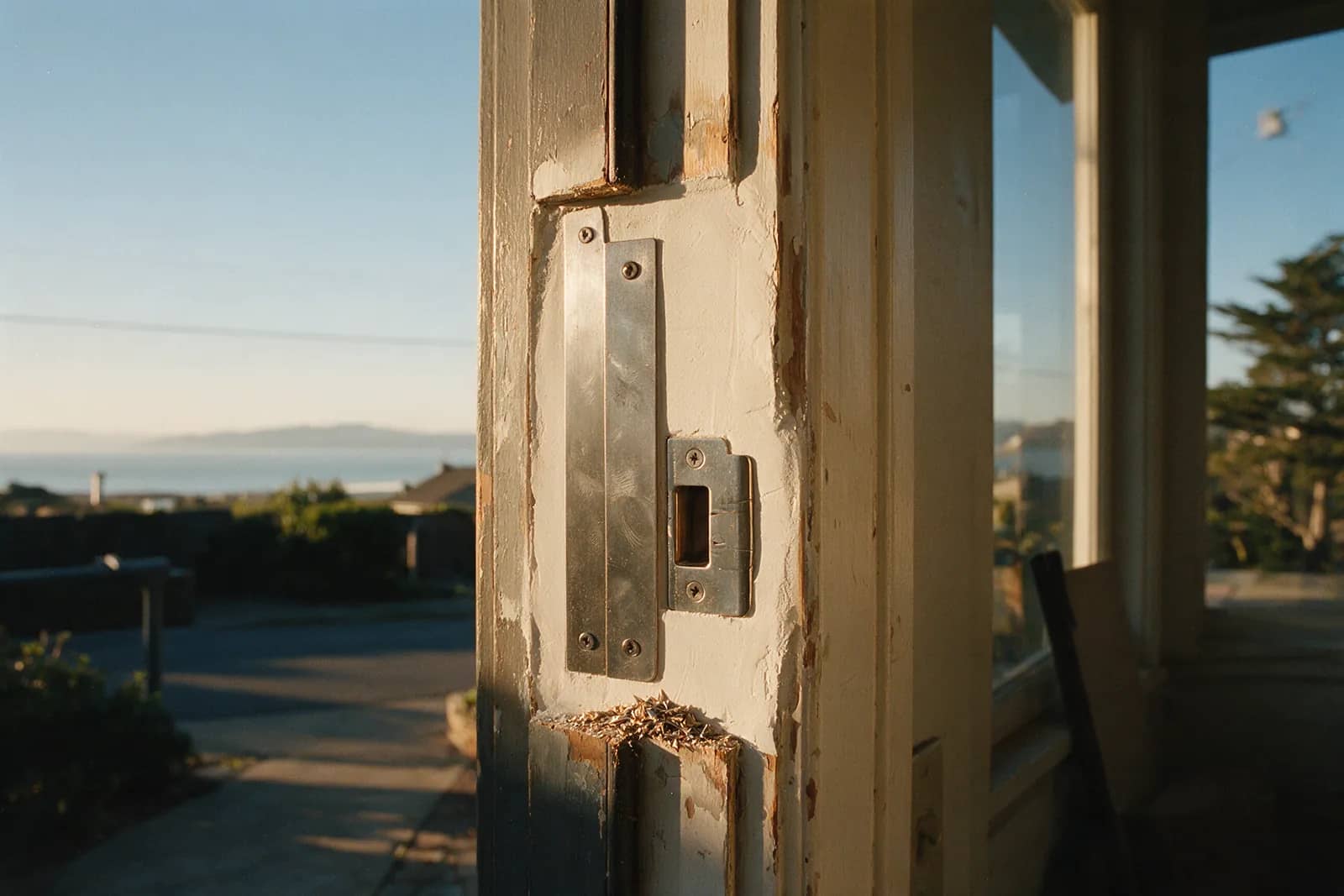
On an aluminum door the force usually spreads the thin stile away from the keeper until the bolt slips past it. The repair is the keeper and the stile brought back, a new cylinder if it was wrenched, and a latch guard, a steel plate over the gap between the door and the frame, fitted so the same tool has nowhere to go next time. On a wood door in a brick front the jamb splits at the strike; the repair is a longer strike with screws that reach the framing, and sometimes a section of jamb. On a pair with no center post, a hookbolt replaces a straight bolt, since a hook cannot be pried apart the way a bolt can.
The rear door is repaired to a different rule. If staff exit through it, it must open from inside with one motion and no key, which is an exit device rather than a deadbolt. A bar bent in the event is replaced at $285 to $749 per device, and the closer and the strike are adjusted so the latch actually reaches home when the door swings shut. A slide bolt added to a staff exit to make it feel safer is not fitted, and the technician explains why.
What the insurer and the landlord want on paper
The insurer wants three things: the police report number, photographs from before the repair, and an itemized receipt naming the parts and the labor. The receipt that reaches your email before the van leaves is written for that purpose. If the claim needs a separate line stating what was damaged and what was done, ask on the call and it comes with the receipt.
Landlords on these blocks are often families who have owned the building for a long time and have views about the hardware on it. A shared rear door is theirs to authorize, and the written line goes to them. A tenant's own street door is usually the tenant's to repair under the lease, with the landlord told in writing. Both are ordinary, and both go faster when the question of who owns which door is settled on the call rather than at the door.
The week after, and the figures
A week later the repaired door should be checked once with the closer working: does it latch on its own from a foot open, does the deadlatch plunger sit on the strike plate and not fall into the hole, does the pair meet without lifting. Those three checks are why the same door is not forced twice. Storefront work outside the repair is $147 to $455, a business lockout when the one key is missing is $127 to $235, and rekeys are $24 to $40 per cylinder. Evening calls add $45 between 8pm and midnight and $75 overnight, inside the figure on the call.
Hillsdale Lock & Key works to a promise called Written Down First: one figure written down on the call covering the visit, the labor and the parts; the technician's name and a thirty-minute window by text before the van leaves; opened without damage first, drilling only after you agree at the written figure; card or tap at the door, an itemized receipt by email matching the work order line for line, and a written line for a landlord, an HOA or an insurer if you need one. After a forced door, the last item is the one every owner ends up using.
Quick answers
The door was forced but no key is missing. Do I need to rekey?+
Not for the event itself. The forced door is repaired at $155 to $415 and the untouched cylinders stay. Many owners rekey anyway because years of staff turnover have put more keys out than they can name, at $24 to $40 per cylinder.
The rear door is shared with two other shops and the apartments upstairs. Who authorizes the repair?+
The landlord, since the shared door is the building's. The repair is done at the same figure, the written line goes to the owner, and every tenant with a key to that door is told if the cylinder is changed.
What will my insurer ask for from the locksmith?+
An itemized receipt naming the parts and the labor, which arrives by email before the van leaves, and sometimes a separate written line describing the damage and the repair. Keep your own photographs from before the work and the police report number alongside it.
Need it handled rather than read about?
(650) 532-7959More guides